
Mooring Tower
HeritageImagine a structure rising from the flat, mist-shrouded plains of Bedfordshire, a skeletal finger pointing towards the heavens, waiting to tether a leviathan of the skies. This was the Mooring Tower at Cardington, the structural anchor for a dream that sought to conquer the globe. In the roaring 1920s, the sky was the ultimate frontier, and Britain intended to rule it not with aeroplanes, but with majestic, silver-skinned dirigibles. The mooring tower was more than just a mast; it was an embarkation point for an empire, an intricate marvel of engineering designed to hold fast the colossal R.101—Britain's last great airship. For a fleeting moment in history, this tower was the centre of the aviation world, a bustling vertical harbour where the romanticism of sea travel met the boundless promise of the air.
The story of the Mooring Tower is inextricably linked to the Imperial Airship Scheme of the 1920s. Following the First World War, the British government envisioned a fleet of imperial airships that would dominate the skies just as British naval ships, a century earlier, had ruled the seas. The goal was to connect the far-flung outposts of the British Empire, reducing travel times from weeks to mere days. To facilitate these behemoths, infrastructure of an unprecedented scale was required. The Royal Airship Works at Cardington became the nexus of this ambition. Here, engineers constructed a monumental mooring mast, standing over 200 feet tall.
This was no simple tether; the Mooring Tower functioned as a fully realised airport terminal suspended in the air. Passengers would arrive at the base, board an internal elevator, and ascend the equivalent of a twenty-storey building. At the summit, a retractable gangway would extend to connect with the nose of the waiting airship, allowing passengers to step directly from the tower into the grand interior of the vessel.
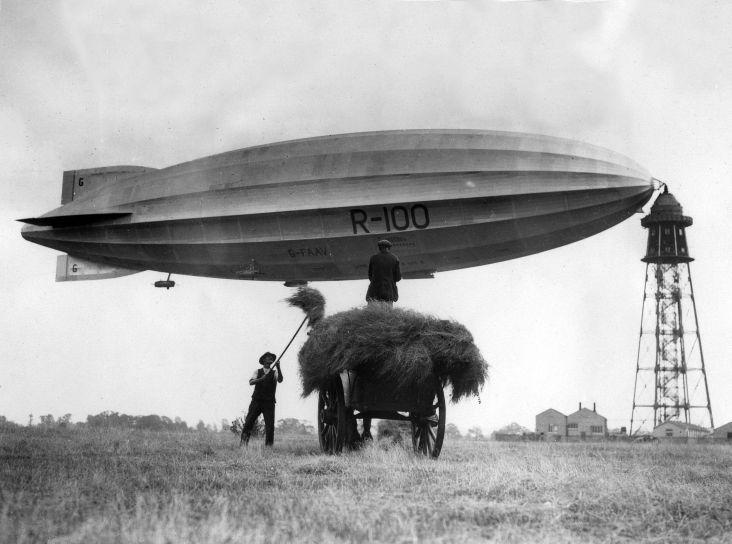

The Mooring Tower was built specifically to receive the R.101, a luxury liner of the air that defied contemporary imagination. The scale of the R.101 was staggering; it was three and a half times the length of a modern 747 jet. Inside its colossal silver envelope, it was a flying palace. The airship boasted a spacious lounge adorned with plush furnishings, a dining room that comfortably seated fifty passengers, and glass-walled promenade decks that offered sweeping, unobstructed panoramic views of the clouds rolling beneath. In an astonishing display of engineering confidence, it even featured a smoking room. To have an open flame aboard a vessel filled with highly flammable gas required the room to be completely lined with asbestos and heavily pressurised to prevent any stray gas from entering.
The narrative of the Mooring Tower is one of soaring ambition shadowed by devastating tragedy. For a few brief years, it was the focal point of global aviation. Visitors would gather on the ground, gazing up in absolute awe as the R.101—and its privately built counterpart, the R.100—approached the tower. The docking procedure was a ballet of immense tension and precision. A ship displacing five million cubic feet of gas had to be gently reeled in by a massive steel cable dropped from the nose, and then locked securely to the mechanical arm at the masthead.


While the great steel mooring masts represented the absolute zenith of 20th-century industry, the British landscape has long been dotted with older, stone sentinels—such as the historic Tower on the Moor—that echo the enduring human desire to reach upwards. Yet, the steel tower at Cardington was entirely unique, designed to hold fast the largest flying machines ever constructed.


Tragically, the dream that the Mooring Tower represented was violently extinguished. In October 1930, the R.101 departed from the Cardington mast on its highly publicised demonstration flight to India. Hampered by horrific weather and a series of technical compromises, the intended flagship of the British Empire crashed in a field in Beauvais, France. The resulting inferno tragically killed nearly all aboard. The disaster sent shockwaves through the nation. Almost overnight, the Imperial Airship Scheme was abandoned, and the great Mooring Tower was left standing empty, a silent vigil to a lost future.
Though the great airships are long gone, the legacy of the Mooring Tower is fiercely preserved. Historians study the site, drawing vital lessons in the risks of apparently small compromises and unforeseen hazards to big projects when confronted by the uncompromising forces of nature. The story of the fatal flight is not just about the failure of a machine, but about the men who built, flew, and died with the ship.


Today, modern telecommunications masts, such as the Emley Moor Mast, pierce the skies where airships once floated, serving as contemporary successors to those early steel towers. But the original Cardington Mooring Mast retains a unique poignancy. Though the structure itself was dismantled in 1943, the colossal hangars still dominate the Bedfordshire skyline, standing alongside the profound historical research that keeps the memory of the R.101 alive.
The significance of the Mooring Tower extends far beyond its concrete foundations. It remains a monument to the audacity of the 1920s, a period when humanity believed it could physically tether the skies to its will. The tragedy of the R.101 halted that ambitious future, but the sheer scale of the vision continues to inspire engineers and dreamers alike.
This article was partly inspired by old photographs and recordings that came to light when someone brought their personal memories to be digitised. It made us wonder what else is out there — in attics, shoeboxes, old cupboards — connected to the Mooring Tower and the daring era of the great airships. If anyone holds old media connected to this organisation or the pioneers who worked in its colossal shadow, services like EachMoment (https://www.eachmoment.co.uk) can help preserve them for future generations. As we look back at the grand structures of our past, preserving the personal, intimate moments captured on film ensures that the human story behind Britain's aviation heritage is never truly lost to the wind.